All Categories
Featured
Table of Contents
4. Can low-code platforms totally change the need for a dedicated advancement group? No. Low-code and no-code platforms stand out at helping non-technical groups model rapidly or construct basic internal tools. Complicated system integrations, heavy security architectures, and core proprietary software still require expert developers to guarantee stability and security.
How long does a typical digital improvement require to yield quantifiable ROI? Digital change is a continuous journey, however preliminary phases usually yield quantifiable returns within 3 to 6 months. By prioritizing high-impact, low-complexity workflows for early automation, services can money longer-term modernization efforts utilizing the savings created in advance.
Business technology trends in 2026 show a more comprehensive shift from experimentation to structured execution. Organizations have actually checked generative AI, expanded automation efforts, and reassessed legacy systems. Now the focus is sharper: governed AI implementation, quantifiable automation results, and modernization strategies that support long-term durability. The following trends highlight where business investment is speeding up and where management focus is heightening.
At the exact same time, industry findings emphasize that without disciplined data and governance practices, numerous AI efforts risk stopping working to deliver measurable service worth. While expert viewpoints highlight various dimensions of the market, they indicate a common truth: AI needs to be structured, automation must be orchestrated, and enterprise architecture need to support scalability, governance, and trust.
Across managed markets and document-intensive environments, these patterns are already reshaping business architecture decisions.
Designing Smart Infrastructure for 2026 Scale
The speed of change entering 2026 is speeding up, with business innovation shifting from incremental upgrades to transformational abilities. Organisations that invest early in these emerging trends will protect a measurable competitive edge throughout efficiency, development, and consumer experience. The following 10 developments are set to define the year ahead, improving how businesses operate, provide services, and compete in an increasingly digital market.
Unlike standard generative tools that count on human prompts, agentic systems carry out jobs end-to-end: planning objectives, taking self-governing actions, and integrating with business applications to deliver quantifiable outputs. They act less like assistants and more like digital group members. This shift will transform how organisations approach labour-intensive tasks such as information event, compliance reporting, procurement workflows, consumer case handling, and systems administration.
Maintaining Critical Tech Innovation PlatformsEarly adopters will be those seeking quick scalability, tight expense control, and quicker decision cycles. However there's an argument to state this ship has already sailed The start of 2027 marks the real end of ISDN across the UK, requiring the last remaining businesses to change in 2026. While the due date has actually been announced for many years, countless SMEs have actually postponed action.
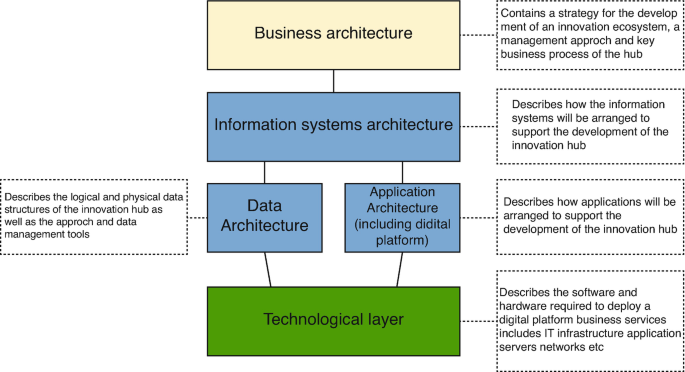
Evaluating Traditional R&D vs. Agile Innovation Cycles
The winners will be organisations that treat this shift not as a technical replacement, but as an opportunity to modernise call routing, hybrid-working assistance, CRM combination, customer insight, and contact centre ability. Providers will differentiate through bundled analytics, call automation, and security features developed for hybrid networks. Attack methods are now evolving faster than human analysts can respond.
Security platforms will keep an eye on endpoints, identity systems, cloud environments, and OT networks constantly, acting immediately on emerging dangers. This move will accompany a rise in combined security stacks, where MDR, SIEM, identity protection, and endpoint controls operate under a single smart structure. Organizations will increasingly determine their security posture through resilience metrics rather than legacy compliance alone.
As organizations end up being more dependent on dispersed networks of suppliers, logistics partners, and digital platforms, vulnerabilities anywhere in the chain can undermine customer confidence and commercial efficiency. In 2026, organisations will prioritise provider confirmation, real-time presence of third-party dangers, and totally auditable information streams throughout their procurement and logistics communities.
How to Architect High-Performance Tech Hubs
Sellers and enterprise operators that can demonstrate end-to-end supply chain security will differ in an increasingly scrutinised market. As AI continues to grow, businesses are starting to question the enduring assumption that expert jobs should be outsourced. In 2026, advanced designs trained on sector-specific workflows will provide organisations the capability to bring previously externalised functions back internal, at scale and at a fraction of the traditional cost.
Logistics operators will utilize AI to orchestrate preparation and optimisation without relying on outsourced consultancies. This shift enables organisations to maintain tactical control, speed up turn-around times, and minimize spend on external specialists.
Manufacturers, energies, and logistics service providers are shifting away from isolated operational networks. In 2026, OT and IT stand to totally converge, enabling maker information, maintenance records, energy usage, and production control systems to merge with ERP and analytics platforms. This convergence will produce: Predictive upkeep prioritised by commercial impact Real-time production and expense exposure Stronger governance across historically unsecured OT devices Organisations that integrate early will lower downtime and totally free trapped value in their functional data.

Latest Posts
Mastering Evolving Tech Development Cycles
Distributed Computing for the Innovation Foundation
Enhancing Enterprise R&D ROI for Smart Hubs